Journal · Essay 004
Charcoal & Canvas: The Art of the Elevated Dinner in the City
You smell a proper charcoal grill before you see it. The door opens onto warmth and woodsmoke, the low percussion of tongs on steel, a dining room lit like the last hour of a good film. Somewhere behind the counter, fire is being treated as a craft.
This is the kind of room that makes you stand a little straighter on the way to the table. Which is, of course, half the reason to book it.
The Table as Theatre
An elevated dinner isn't about excess. It's about attention — the same discipline as a wardrobe or a brew bar, applied to fire and salt.
Start with oysters, freshly shucked, dressed with nothing but restraint. They reset the palate and set the tone: tonight, the ingredients are the entertainment.
Then the main event — a T-bone done over real charcoal, rested properly, carved to share. A great cut needs almost nothing from the kitchen except respect, and you can taste the difference between a kitchen that knows that and one that doesn't.
Order for the table, not the feed. The best dinners are shared off one board.
The supporting cast matters as much as the headline. Bone marrow if it's on the menu, a bitter-leaf salad to cut the richness, something charred and green from the same coals. And one glass of red chosen by asking the room, not the app — sommeliers exist precisely so you can stop performing expertise and start having dinner.
Sharing is the quiet luxury here. One board in the middle, everyone leaning in, the conversation organised around something worth pausing for. A meal becomes an event the moment nobody's protecting their own plate.
Dress for the Room
Evening attire for a room like this follows one rule: look like you didn't try, because you didn't have to.
The foundation is a crisp base layer — a white tee in heavy cotton or a fresh open-collar shirt, nothing competing for attention. Over it, the leather jacket, worn-in and certain of itself, doing what good leather does in low light: absorbing the room's glow and giving back texture.
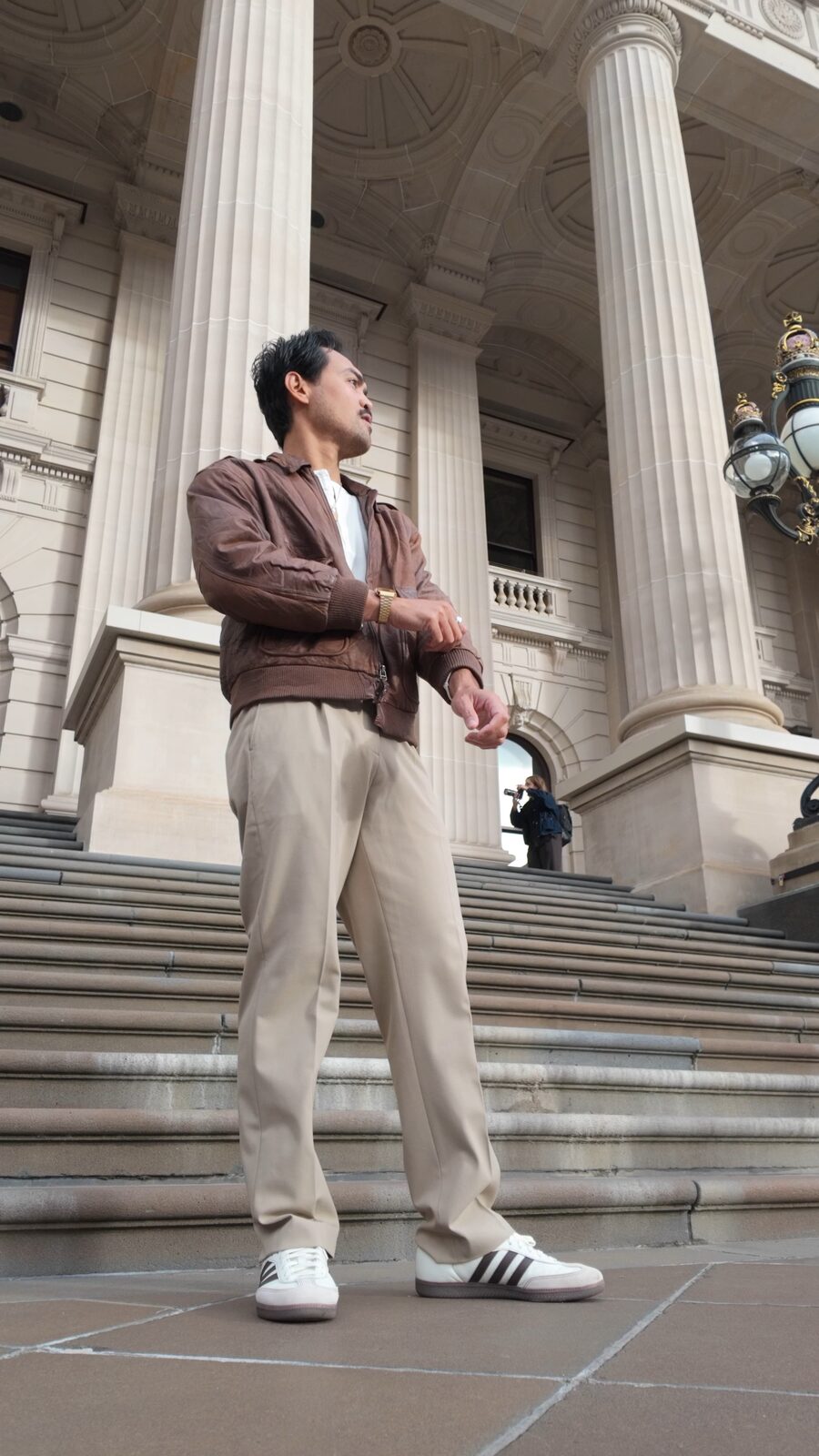
Below, tailored trousers with an honest drape and loafers or the cleanest sneakers you own. The finishing layer is grooming, not jewellery — a considered fragrance applied like a rumour, skin and hair that suggest a routine rather than an effort.
Old money elegance was never about labels. It's the confidence of a man whose clothes have nothing to prove because he doesn't either.
Leave Slowly
The mark of a great dinner is that nobody reaches for their coat when the plates clear. Order the digestif. Let the charcoal smoke settle into the leather a little — the jacket will carry tonight into next week, which is exactly the kind of souvenir worth keeping.
It's the same philosophy that runs through everything else worth doing — the wardrobe, the coffee, the travel. Choose fewer things, choose them carefully, and give them your full attention while they're in front of you. A dining room built around fire understands this better than most: nothing on the table got there quickly, and nothing about the evening should leave that way either.
Dining out, done properly, isn't consumption. It's curation — of ingredients, of company, of the version of yourself you bring to the table.
The fire does its work. You do yours.